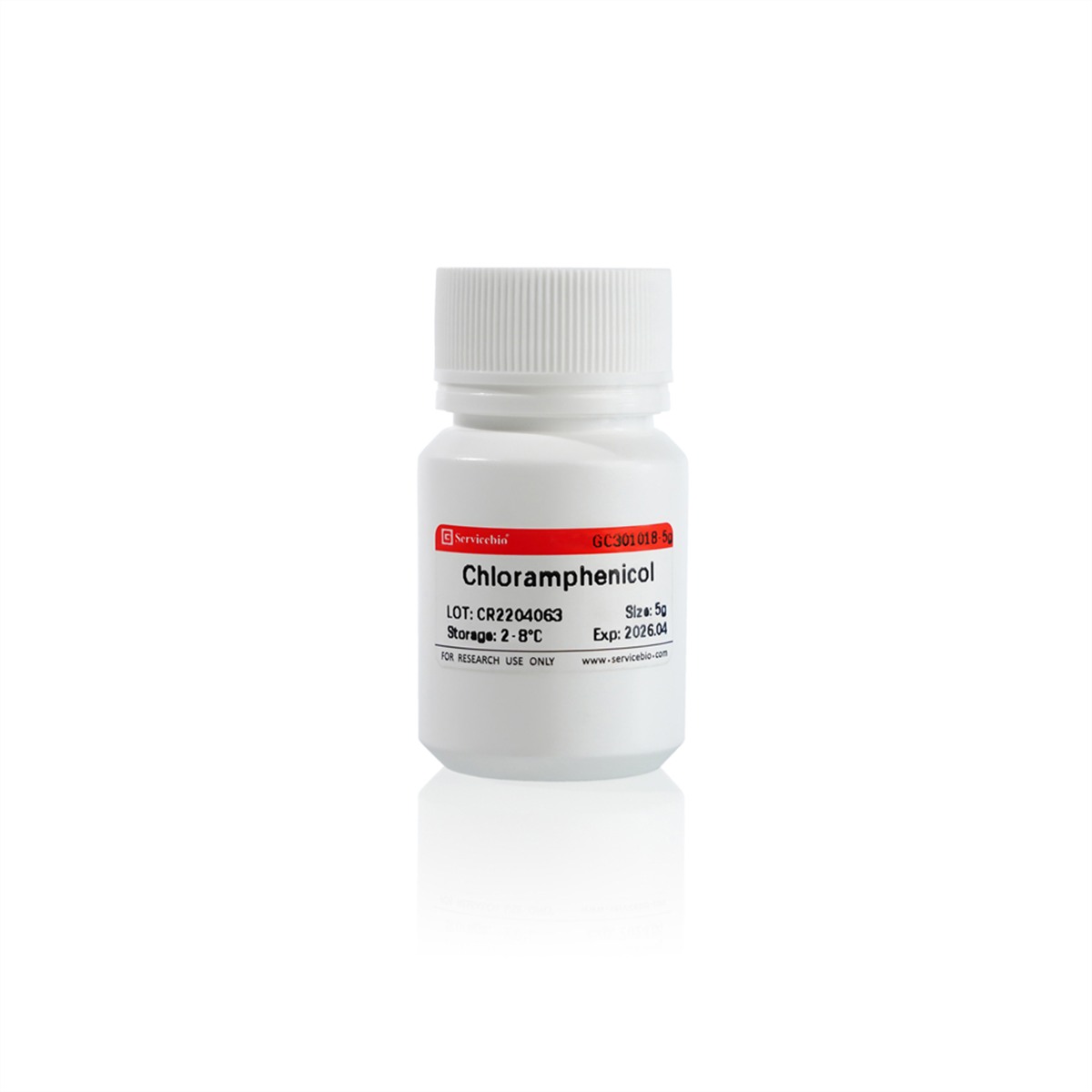
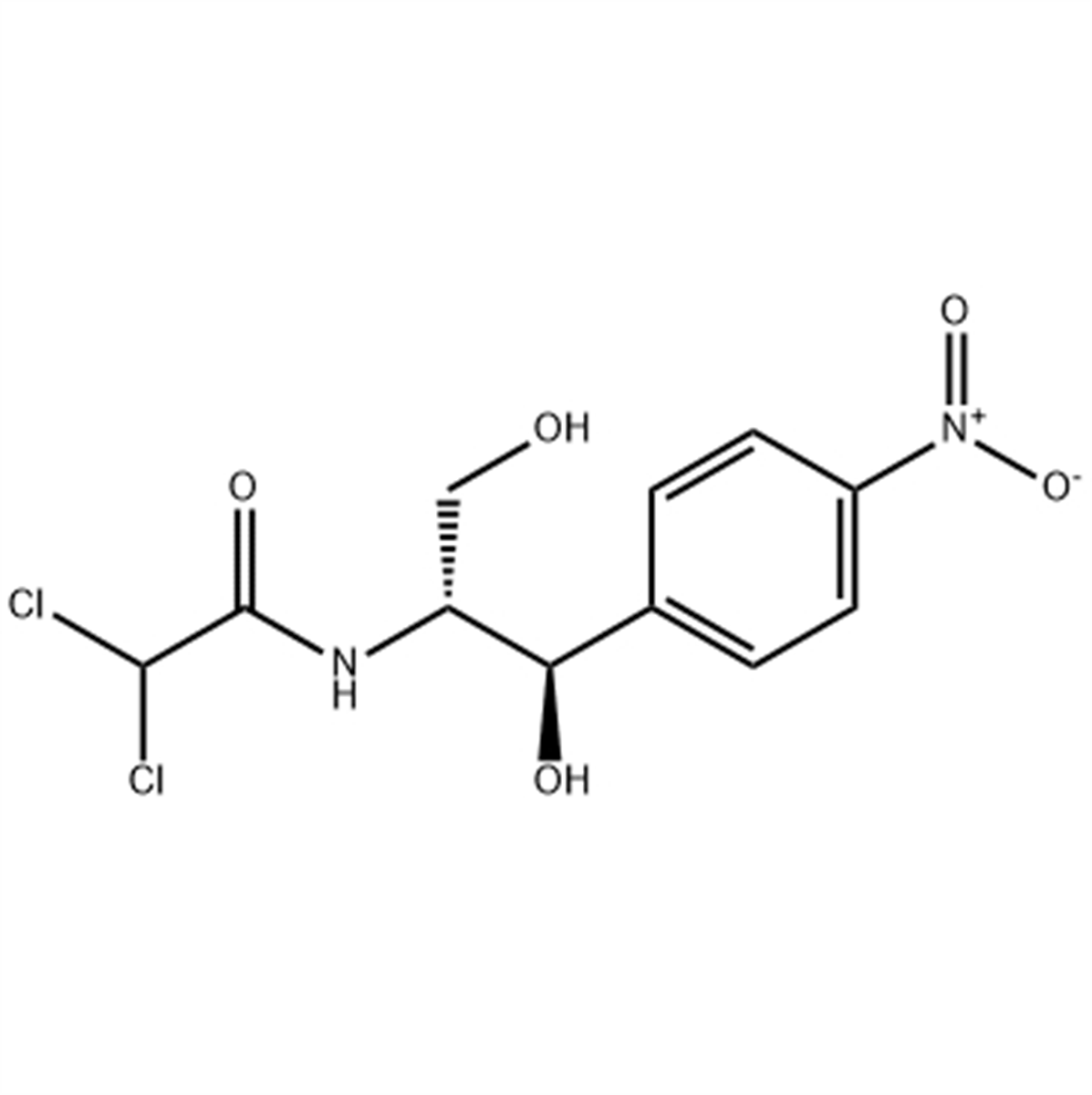
Chloramphenicol
Cat. No.: SB-GC301018-5g
Size: 5g
Description
Chloramphenicol, a bacterial broad-spectrum antibiotic, inhibits the growth of Gram-negative and Gram-positive bacteria by inhibiting mRNA translation on the 50S ribosome during peptide bond formation catalyzed by peptide bond transferase. In addition, chloramphenicol also has rickettsiae resistance and psittace-lymphogranulomatous chlamydia resistance, so chloramphenicol can be used for bacterial screening. Acetylation of the chloramphenicol acetyltransferase gene (CAT gene) resists chloramphenicol resistance. Based on this principle, chloramphenicol can be used as a screening drug to screen transformed cells containing chloramphenicol resistance gene in molecular biology experiments. The recommended effective working concentration is 5-20µg/ mL.
Basic Attributes
| Name |
Chloramphenicol |
| Synonyms |
Levomycin, levomycin |
| CAS |
56-75-7 |
| Molecular formula |
C11H12Cl2N2O5 |
| Molecular mass |
323.13 |
| Purity |
≥99% |
| Appearance (character) |
Light yellow crystalline fine powder |
| Storage conditions |
2-8 °C |
| Unit |
Bottle |
| Spec. |
5g |
| Pubchem CIDs |
5959 |
| MDL No. |
MFCD00078159 |
| EC No. |
200-287-4 |
| Related categories |
Biochemical reagent, Anti-biotic |
| Solubility |
Solubility 50 mg/ ml in Ethanol |
Storage and Handling Conditions
Storage at 2-8 ℃.
Assay Protocol / Procedures
Solubility: Soluble in methanol, ethanol, butanol, acetone and ethyl acetate, slightly soluble in ether, insoluble in benzene and petroleum ether.
Preparation of storage solution: 1g chloramphenicol was dissolved in 20mL 100% ethanol and fully dissolved to obtain 50mg/ mL mother liquor. After filtration and sterilization with 0.22µM organic phase filtration membrane, it was divided into small quantities and stored at -20°C to avoid repeated freeze-thaw, effective for one year.
[Note]: Chloramphenicol storage solution cannot be autoclaved.
Note:
1. Please wear lab coat and disposable gloves during operation