

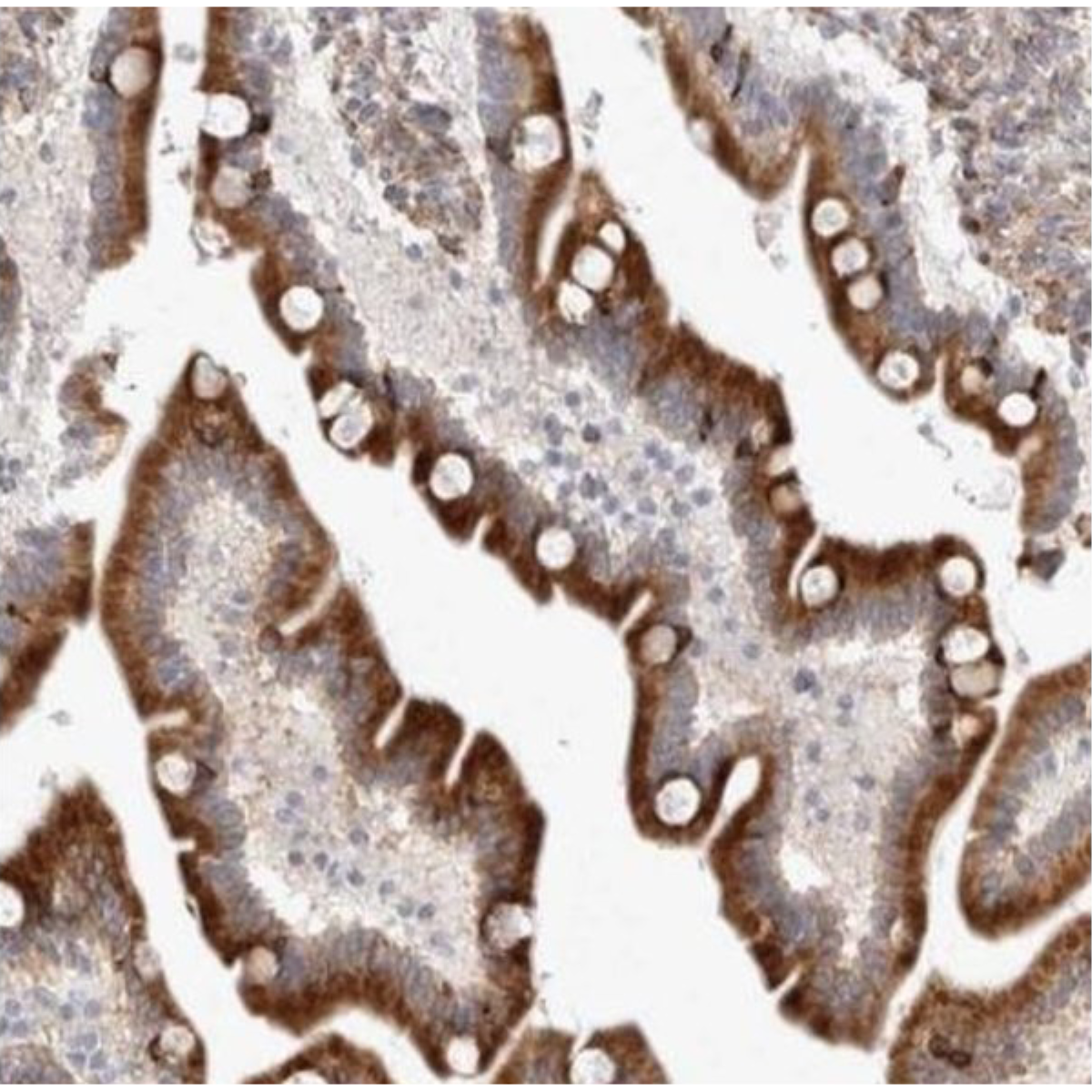
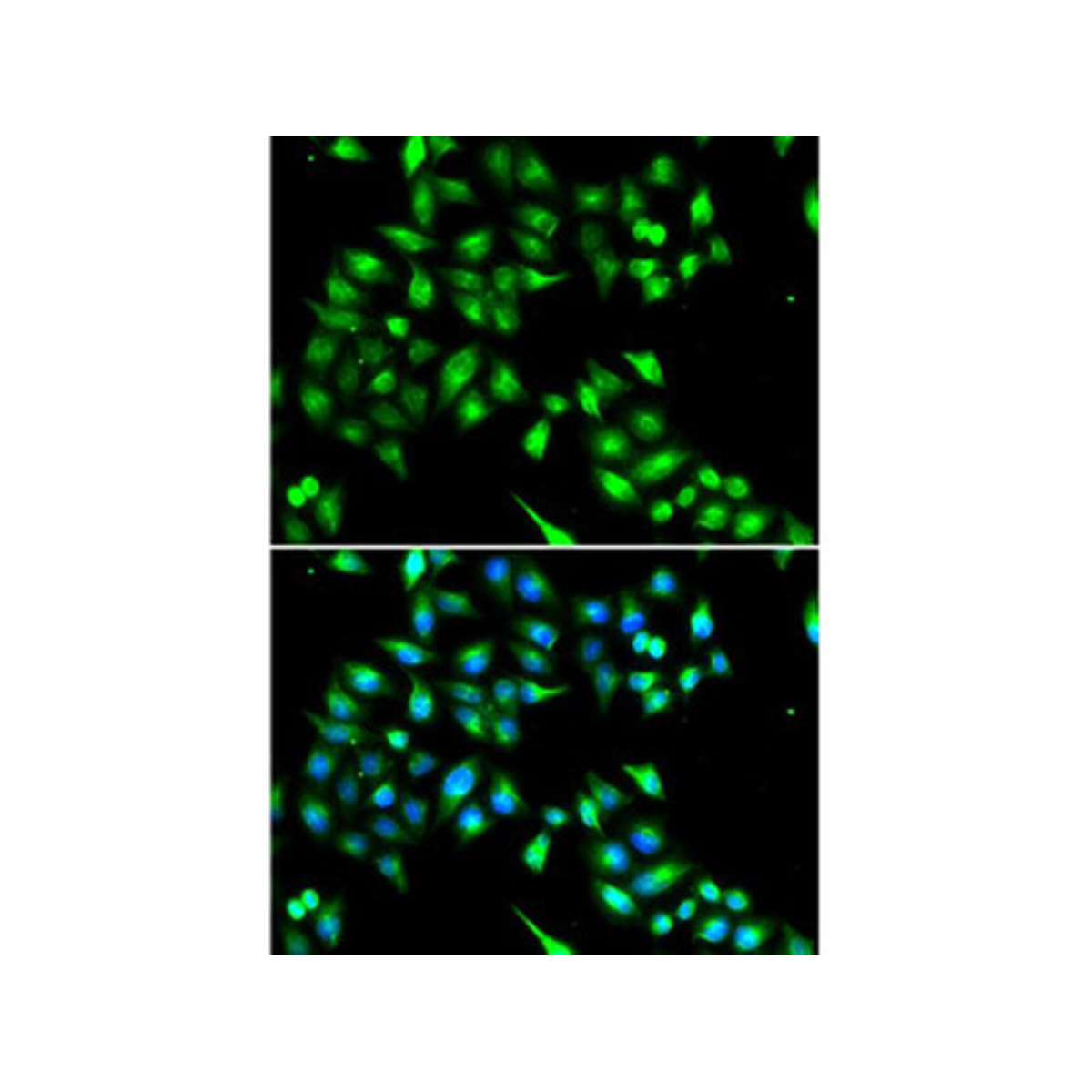
Anti-Mouse C8orf79 (KIAA1456) Polyclonal Antibody, Rabbit
Product#: FNK-MKA1456AF
$495.39
Availability:
Ships in 1-2 Weeks
Anti-Mouse C8orf79 (KIAA1456) Polyclonal Antibody, Rabbit
General information
| Cat. No. | :FNK-MKA1456AF |
| Quantity | :50 µg (250 µL) |
| Gene | :mouse C8orf79 (chromosome 8 open reading frame 79) (mC8orf79, mKIAA1456) |
| Immunogen | :GX2099 (GST-fusion protein, 181 amino acids) RPMKIPEGWANSTVSQQPSRHPSLDLHAPEPFSTKGPNLDEVFVDTSSQRHLGWL RTPGTSDNFSGHKGGESRRKEGGNFLDITDTGDSVAASNSSDPSARKILRRVSAFD SNDSNSEDSSFLEAQRDATDSKAFMRYYHVFREGELSSLLQESVSELQVLSSGNDH GNWCIIAEKKRSWD |
| Format | :Affinity Purified Rabbit IgG |
| Constitution | :PBS containing with 50% glycerol and 0.02% of NaN3 |
| Antigen Species | :Mouse |
| Host Species | :Rabbit |
| Label | :Unlabeled |
| Cross Reactivity | :Mouse |
| Application | :Western blotting (1 : 1,000), Other applications have not been tested. |
| Specificity |
:Specific to recombinant protein GX2099. This antibody detects mC8orf79 protein.
Other species have not been tested. |
| Storage | :Store at -20°C. Avoid freeze-thaw cycles. |
| Shipping Condition | :Dry Ice |
Antigen Characterization
- Type:Primary
- Application:ELISA, Western Blot, Immunohistochemistry (IHC),Functional assays for enzyme activity
- Species:Human
- Recombinant:Yes
Human Diseases
- Cancer: KIAA1456 is associated with tumor suppression; its low expression is linked to various cancers such as breast, colon, bladder, cervical, and testicular cancer. Overexpression of KIAA1456 can inhibit tumor cell proliferation, migration, and invasion, suggesting its role as a potential tumor suppressor gene.
- DNA Damage Response: KIAA1456 is involved in the repair of DNA damage; its expression affects cellular repair mechanisms and influences cell survival after DNA damage. Low levels of KIAA1456 may contribute to increased susceptibility to genomic instability and malignancy.
Cellular Signaling Pathways
- tRNA Modification Pathway: KIAA1456 functions as a tRNA methyltransferase, catalyzing modifications necessary for tRNA maturation and proper protein translation.
- Cell Cycle Regulation: KIAA1456 influences the expression of cyclins (e.g., cyclin D1), impacting cell cycle progression and potentially inhibiting tumor growth.
- Epithelial-Mesenchymal Transition (EMT): In lung cancer cells, overexpression of KIAA1456 leads to increased E-cadherin and decreased N-cadherin levels, suggesting its role in regulating cell adhesion and migration during cancer metastasis.
Aliases for TRMT9B Gene
References
- Okazaki,N. et al.: DNA Res., 10(1), 35 (2003).
- J, Jungfleisch. “CHIKV Infection Reprograms Codon Optimality to Favor Viral RNA Translation by Altering the Trna Epitranscriptome.” (PA5-77162), www.thermofisher.com/antibody/product/KIAA1456-Antibody-Polyclonal/PA5-77162.
- Wang, Shuling, et al. “Expression of KIAA1456 in Lung Cancer Tissue and Its Effects on Proliferation, Migration and Invasion of Lung Cancer Cells.” Oncology Letters, U.S. National Library of Medicine, Sept. 2018, pmc.ncbi.nlm.nih.gov/articles/PMC6096096/.
- Recombinant Human KIAA1456 Protein (ABIN2712973).” Recombinant Human KIAA1456 Protein (ABIN2712973), www.antibodies-online.com/protein/2712973/KIAA1456+KIAA1456+protein+His+tag/.
- Anti-Kiaa1456 Antibody (110-330) (STJ29273).” St John’s Laboratory Ltd, stjohnslabs.com/anti-kiaa1456-antibody-110-330-stj29273/.
