Anti-Mouse BTBD7 (KIAA1525) Polyclonal Antibody, Rabbit
Product#: FNK-MKA1525AF
$495.39
Availability:
Ships in 1-2 Weeks
Anti-Mouse BTBD7 (KIAA1525) Polyclonal Antibody, Rabbit
General information
| Cat. No. | :FNK-MKA1525AF |
| Quantity | :50 µg (250 µL) |
| Gene | :mouse BTB (POZ) domain containing 7 (mBTBD7, mKIAA1525) |
| Immunogen | :GX0245 (GST-fusion protein, 132 amino acids) MTSDVFYELSKDHLLTAIQSDYLQASEQDILKYLIKWGEHQLMKRIADREPNLLSGTAHSVNKRG VKRRDLDIEELREILSSLLPFVRIEHILPINSEVLSDAVSSFLLLFLSRKEKCQTYPALIILNNFSY |
| Format | :Affinity Purified Rabbit IgG |
| Constitution | :PBS containing with 50% glycerol and 0.02% of NaN3 |
| Antigen Species | :Mouse |
| Host Species | :Rabbit |
| Label | :Unlabeled |
| Cross Reactivity | :Human/ Mouse |
| Application | :Western blotting (1 : 1,000), Other applications have not been tested. |
| Specificity |
:Specific to recombinant protein GX0245. This antibody detects mBTBD7 protein. It also recognizes
human BTBD7 protein. Other species have not been tested. |
| Storage | :Store at -20°C or below. Avoid freeze-thaw cycles. |
| Shipping Condition | :Dry Ice |
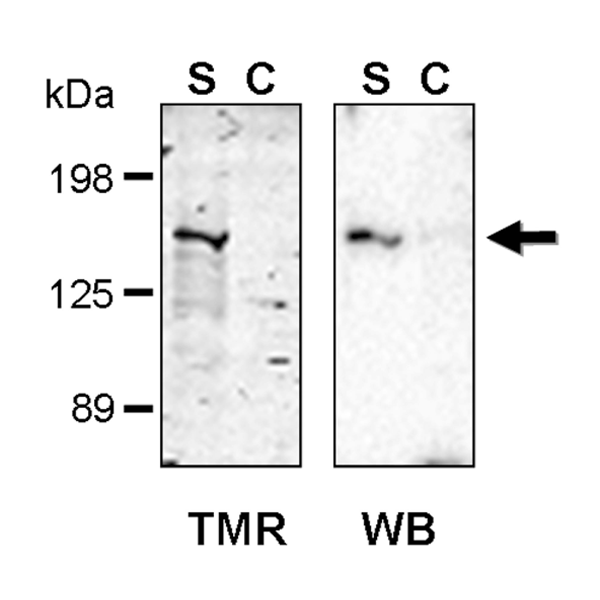 |
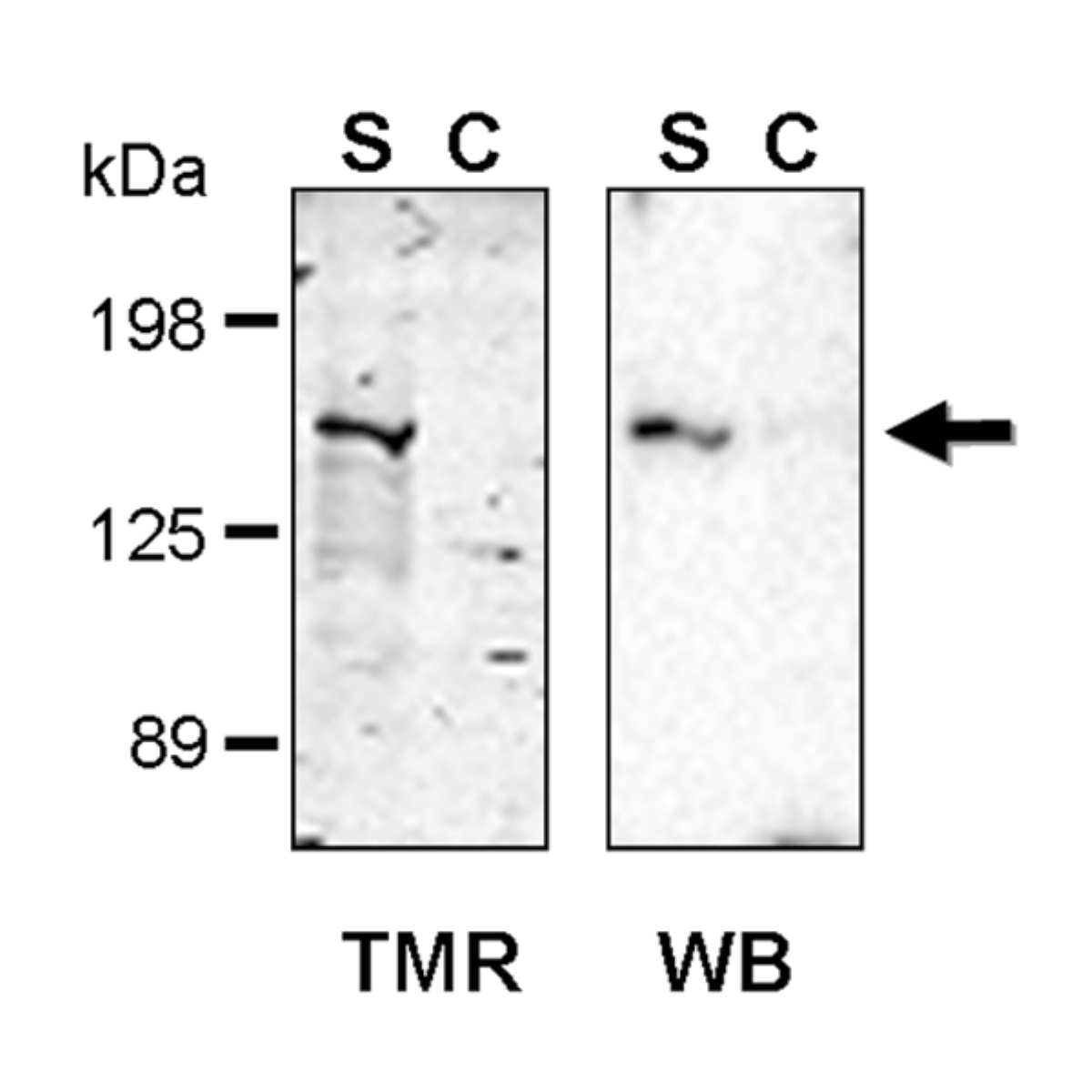
TMR-Label(Left) & Western blot(Right) S: Total lysate of HaloTag-fused KIAA1525 expressed HEK293 cells (4 µg) C: Control HEK293 cell lysate (4 µg) *HaloTag (MW: Approx. 33 kDa) |
Antigen Characterization
- Type:Primary
- Application:ELISA, Western Blot
- Species:Human
- Recombinant:Yes
Human Diseases
- Bipolar Disorder: Genetic studies suggest susceptibility loci on chromosome 8, including C8orf79, are associated with bipolar disorder1.
- Waardenburg Syndrome: Linked to genetic mapping involving C8orf79, indicating its potential role in this condition1.
- Lymphoma: Expression levels of C8orf79 have been analyzed in diffuse large B-cell lymphoma (DLBCL), suggesting a relevance in cancer biology2.
Cellular Signaling Pathways
- Methylation Processes: C8orf79 is suggested to function as a methyltransferase, implicating it in cellular signaling through methylation modifications3.
- Gene Regulation: Involvement in pathways regulating gene expression, particularly in response to cellular stress and development3.
Aliases for BTBD7 Gene
References
- Okazaki,N. et al.: DNA Res., 10(1), 35 (2003).
- Li, Zi-Xiong, et al. “High BTBD7 Expression Positive Is Correlated with Slug-Predicted Poor Prognosis in Hormone Receptor-Negative Breast Cancer.” Annals of Translational Medicine, AME Publishing Company, 10 Aug. 2021, atm.amegroups.org/article/view/76317/html.
- Author links open overlay panelTakayoshi Sakai a, et al. “Btbd7/Cleftin Regulates Cleft Formation and Branching Morphogenesis of Epithelial Cells.” Journal of Oral Biosciences, Elsevier, 22 Apr. 2013, www.sciencedirect.com/science/article/abs/pii/S1349007913000327.
- Btbd7 BTB Domain Containing 7 [Homo Sapiens (Human)] - Gene - NCBI.” National Center for Biotechnology Information, U.S. National Library of Medicine, www.ncbi.nlm.nih.gov/gene/55727.
- Liu, Yun, et al. “The Role of BTBD7 in Normal Development and Tumor Progression.” Technology in Cancer Research & Treatment, U.S. National Library of Medicine, 2023, www.ncbi.nlm.nih.gov/pmc/articles/PMC10102955/.