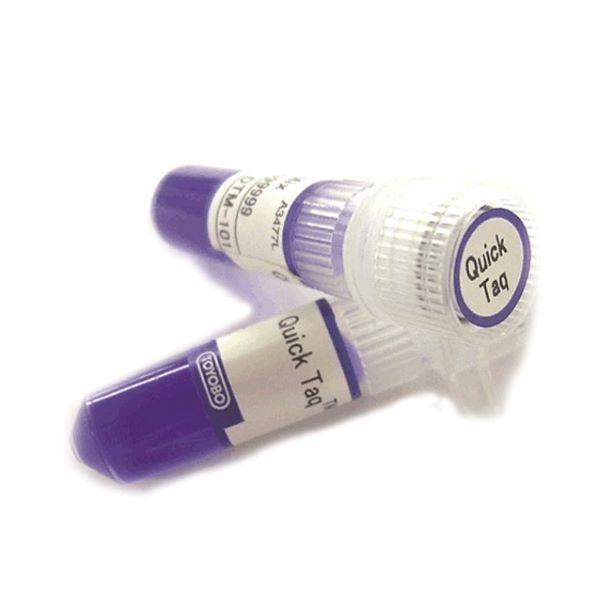

Anti-HHV-7 gH, Mouse-Mono(clone 2)
Product#: FNK-65-210
$303.44
Availability:
Ships in 1-2 Weeks
Anti-HHV-7 gH, Mouse-Mono(clone 2)
Cat.No: FNK-65-210Size: 100 μg
Storage: -20℃
Concentration: 1.0 mg/ml
Buffer: PBS- with 50% glycerol
Purity: Purified IgG fraction with protein A from hybridoma cell culture medium.
Immunogen: His6-tagged recombinant gH of HHV-7 encoding 333-636 amino acids expressed in E. coli.
Isotype: Mouse IgG1k
Reactivity: Reats with gH oh HHV7.
Application
1. Western blotting (1/500~1/1,000 dilution)2. Immunoprecipitation (assay dependent)
3. Immunofluorescent and Immunocytochemical staining (1/100~1/3,200 dilution)
4. ELISA (assay dependent)
Background
Human herpesvirus 7 (HHV-7) is one of nine known members of the Herpesviridae family that infects humans. HHV-7 is a member of Betaherpesviridae, a subfamily of the Herpesviridae that also includes HHV6 and cytomegalovirus (HHV-5 or HCMV). HHV-7 often acts together with HHV-6, and the viruses together are sometimes referred to by their genus, Roseolovirus. HHV-7 was first isolated in 1990 from CD4+ T cells taken from peripheral blood lymphocytes. Both HHV-6B and HHV-7, as well as other viruses, can cause a skin condition in infants known as exanthema subitum, although HHV-7 causes the disease less frequently than HHV-6B. HHV-7 infection also leads to or is associated with a number of other symptoms, including acute febrile respiratory disease, fever, rash, vomiting, diarrhea, low lymphocyte counts, and febrile seizures, though most often no symptoms present at all.Herpesviruses encode several glycoproteins that are targeted to the virion envelope. They play critical roles in viral infection, including attachment, penetration, cell-to-cell spread and the maturation of nascent viral particles. In human herpesviruses, envelope glycoprotein H (gH) associates with glycoprotein L (gL) to form a gH–gL complex, which is a key participant in fusion events critical to herpesvirus infection.
Please note: All products are FOR RESEARCH USE ONLY. NOT FOR USE IN DIAGNOSTIC PROCEDURES. NOT FOR MILITARY USE.
Data Images
65-210 Anti-HHV7 gH antibody, mouse monoclonal (Clone 2)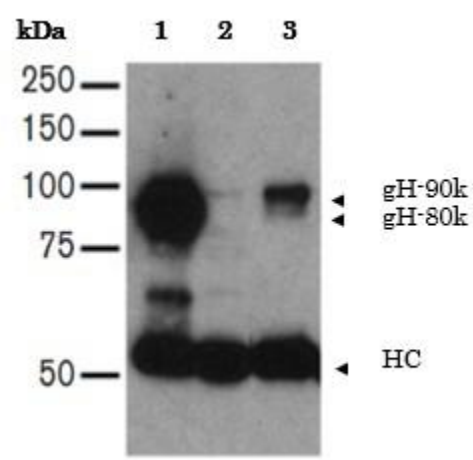
Fig.1. Immunoprecipitation of HHV7 gH in the lysate of HHV7 infected-SupT-1 cells
1st lane: HHV7 infected SupT-1 cell lysate
2nd lane: Mock Sup1 cell lysate
3rd lane: Virion
The antibody conjugated with agarose was used for immunoprecipitation and for western blotting, the antibody was used at 1/1,000 dilution. gH-90 may be the precursor and gH-80, the mature form of gH glycoprotein.
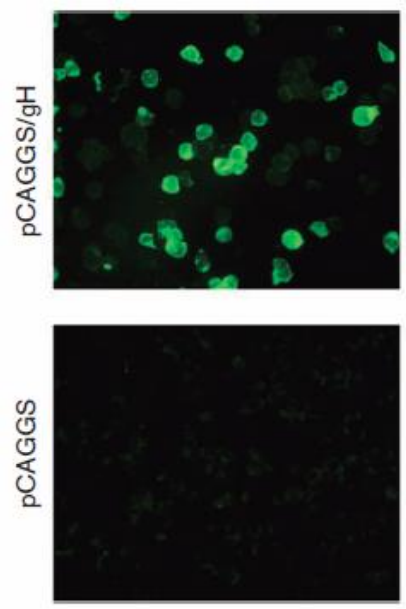
Fig.2. Immunofluorescence staining of gH protein in 293T cells transfected with gH expessing plasmid
The plasmid pCAGGS/gH was transfected and two days later, the cells were harvested and fixed with methanol and stained with indirect immunofluores using this antibody and fluorescein-conjugated goat antibodies against mouse IgG.
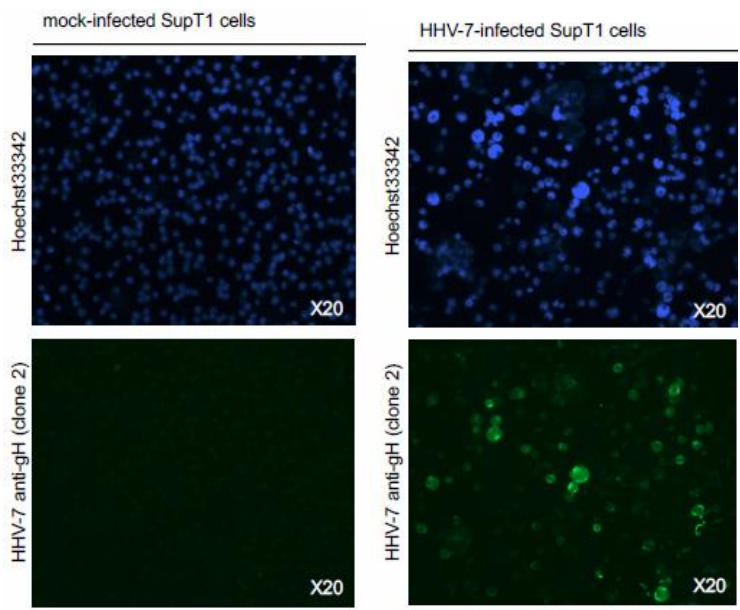
Fig.3. Immunofluorescence staining of gH protein in SupT1 cells infected with HHV-7
HHV-7 infected SupT1 cells (at 4 days post infection; dell-to-cell spreading)
Aceton/Methanol (70%/30%) fixation and permeabilization.
Anti-HHV-7 gH antibody at 1/100 dilution
Alexa Fluor 488 conjugated donkey anti-mouse IgG at 1/300
Hoechst33342 at 1/1,000 dilution
Reference
This antibody was described and used in the following publications.Sadaoka T, Yamanishi K, Mori Y. Human herpesvirus 7 U47 gene products are glycoproteins expressed in virions and associate with glycoprotein H. J Gen Virol. 2006 Mar;87(Pt 3):501-8. PMID: 16476971. WB, IP, IF