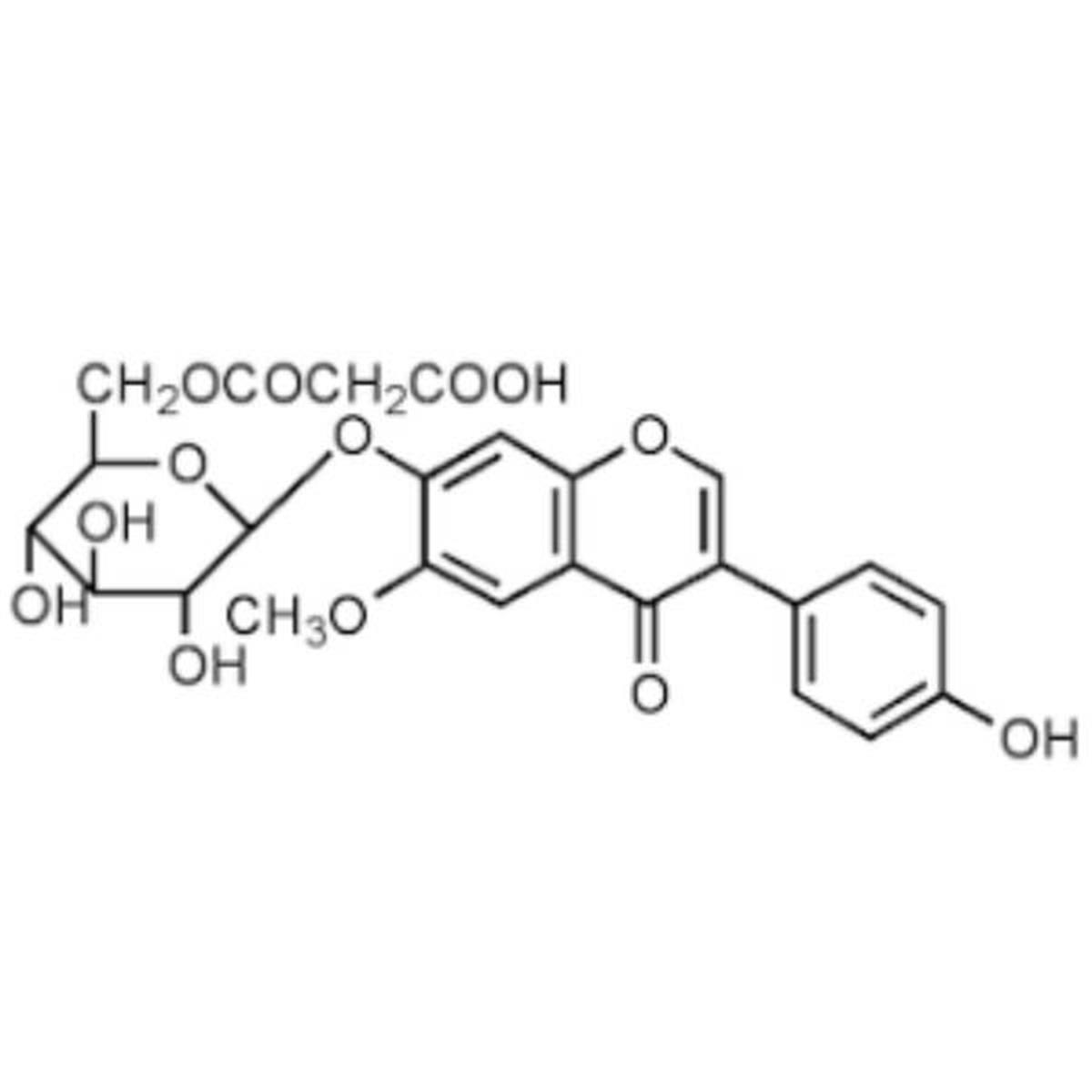
6''-O-Malonylglycitin
Cat. No. FNK-NH014201
Features:
Size: 1mg
CAS #: 137705-39-6
Molecular Formula: C
25H
24O
13
Molecular weight: 532.45
Purity: >90% (HPLC)
Storage: -20°C, Dark Storage
Product description
6''-O-Malonylglycitin is an isoflavone glycoside derivative found naturally in soybeans and other legumes. It is a malonylated form of glycitin, belonging to the class of phytoestrogens with potential health benefits.
Properties
- Molecular formula: C25H24O13
- Molecular weight: 532.45 g/mol
- Appearance: Likely a white to off-white crystalline powder
- Solubility: Soluble in polar organic solvents, slightly soluble in water
Applications and usage
- Research tool for studying isoflavone metabolism and bioavailability
- Used in studies related to phytoestrogen effects on human health
- Employed in food science research on soy-based products
- Potential applications in nutraceutical and functional food development
- Used as a standard in analytical chemistry for isoflavone quantification
Safety and handling
- For research use only - not for human consumption without proper evaluation
- Handle with appropriate personal protective equipment (PPE)
- Store in a cool, dry place, protected from light and moisture
- Avoid inhalation, ingestion, and contact with skin and eyes
Involved human diseases
6''-O-Malonylglycitin, as an isoflavone, may be studied in relation to:
- Antioxidant Activity: Isoflavones can act as antioxidants, potentially protecting cells from oxidative damage.
- Anti-Inflammatory Properties: Some studies suggest isoflavones may help reduce inflammation in the body.
- Cardiovascular Health: Soy isoflavones may have beneficial effects on heart health, though more research is needed.
- Menopausal Symptoms: Isoflavones are sometimes used to help alleviate menopausal symptoms like hot flashes, though evidence is mixed.
Involved cell signaling pathways
Isoflavones like 6''-O-Malonylglycitin may affect the following signaling pathways:
- AKT/mTOR pathway: Isoflavones like genistein have been shown to inhibit the AKT/mTOR signaling pathway in some cancer cells.
- MAPK pathway: Isoflavones can also disrupt the MAPK signaling pathway in certain cancer cell types.
As a phytoestrogen, 6''-O-Malonylglycitin may potentially interact with estrogen receptors and affect estrogen signaling pathways, though specific evidence for this compound is lacking.
Isoflavones in general have been associated with effects on:
- WNT/β-catenin signaling
- TGF-β/SMAD pathway
- NF-κB and STAT3 pathways
- FGF and VEGF pathways
The malonyl form of isoflavones like 6''-O-Malonylglycitin may enhance absorption and bioavailability compared to other forms, potentially increasing their biological effects.
In plant cells, isoflavones play a role in plant-environment interactions and defense responses, suggesting they may affect stress response signaling pathways in plants.