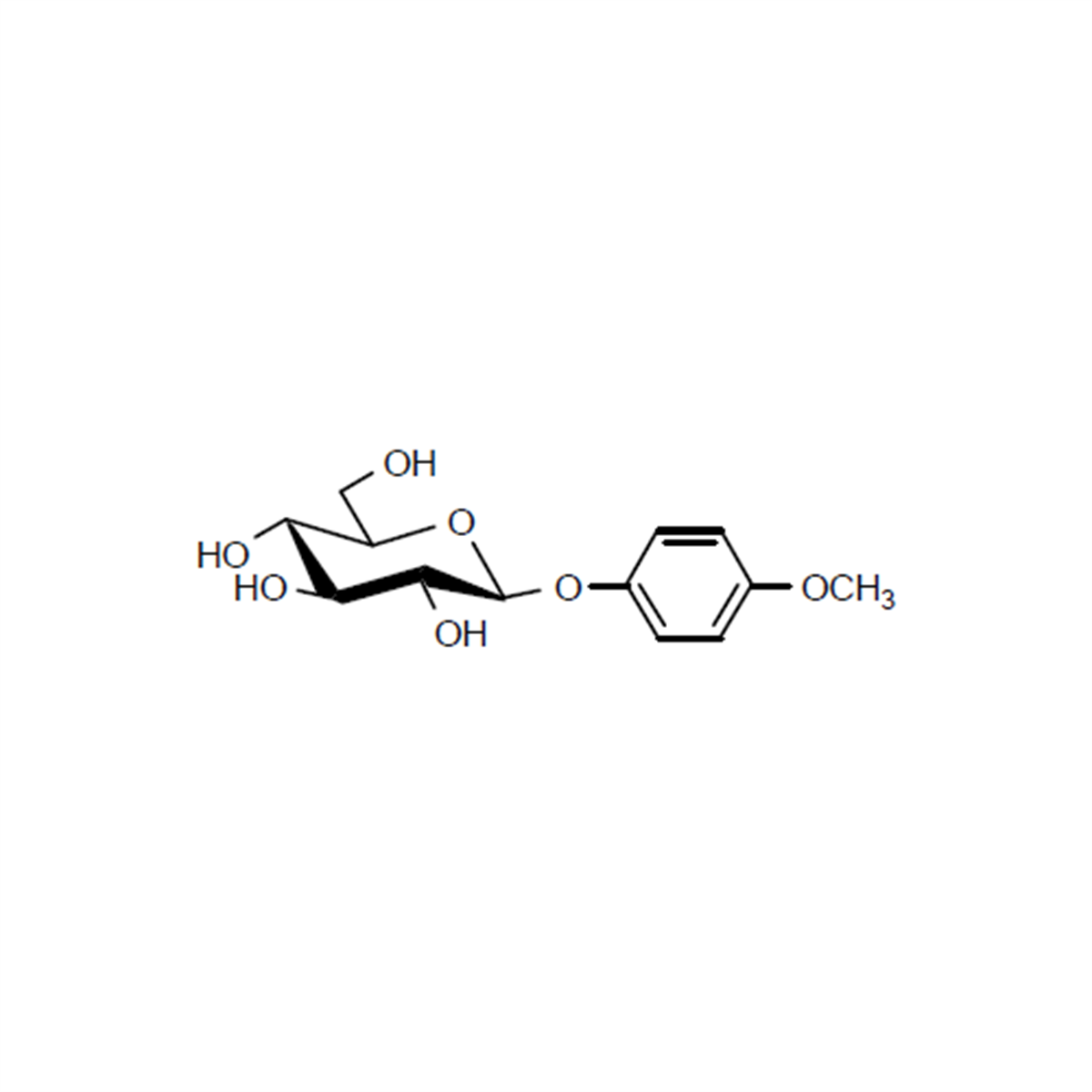
4-Methoxyphenyl β-D-glucopyranoside
Product#: FNK-GL002005
$281.36
Availability:
Ships in 1-2 Weeks
4-Methoxyphenyl β-D-glucopyranoside
- CAT Number : FNK-GL002005
- CAS Number : 6032-32-2
- Molecular Weight : 286.28
- Molecular Formula : C13H18O7
- Pack size: 5 g
- Store: 2-10 ℃
- Purity: >98%(HPLC)
4-Methoxyphenyl β-D-glucopyranoside is a synthetic glycoside consisting of a glucose molecule linked to a 4-methoxyphenyl group. It is likely used as a model compound in carbohydrate chemistry research and glycobiology studies.
Property
- Chemical Formula: C13H18O7
- Molecular Weight: Approximately 286.28 g/mol
- Appearance: Likely a white to off-white crystalline powder
- Solubility: Probably soluble in water and polar organic solvents
- Research: Used in studies investigating glycoside chemistry and enzyme kinetics
- Analytical Standard: May serve as a reference compound in carbohydrate analysis
- Biochemical Studies: Potentially used to study glycoside hydrolases and other carbohydrate-active enzymes
- Storage: Store in a cool, dry place, protected from light
- Handling: Use appropriate personal protective equipment
- Safety Measures: For research use only; not for human consumption without proper testing and approval
- Neurological Disorders
- Alzheimer's Disease: Research suggests that this compound may be relevant to Alzheimer's disease, particularly through its action on beta-amyloid. Its neuroprotective properties could potentially help mitigate the progression of neurodegenerative processes.
- Parkinson's Disease: While not directly studied, the neuroprotective effects observed with similar compounds suggest potential benefits for Parkinson's disease as well
- Metabolic Disorders
- Diabetes: Studies have indicated beneficial effects on diabetic mice models. The compound may play a role in regulating glucose metabolism and improving insulin sensitivity.
- Cardiovascular Diseases
Some research has shown that related compounds can have protective effects on the cardiovascular system, potentially reducing the risk of various heart and blood vessel disorders.
- Inflammatory Conditions
- The anti-inflammatory properties of 4-methoxyphenyl β-D-glucopyranoside and similar phenolic compounds may be beneficial in treating various inflammatory diseases. These effects are likely mediated through the inhibition of pro-inflammatory cytokines and modulation of key inflammatory pathways such as NF-κB, MAPK, and NLRP3.
- Cancer
- While not extensively studied, some research indicates potential anticancer effects. The compound may induce cell cycle arrest in cancer cells, suggesting a possible role in cancer treatment or prevention.
- Protein Kinase A (PKA) Signaling Pathway
- Activation of PKA in the liver
- Potential promotion of lipid breakdown through PPARα activation
- Calpain1/PKA/CREB Pathway
- Phosphorylation of CREB
- Increased expression of PKA RII
- Associated with neuroprotective effects and increased glucose uptake
- Apoptosis-Related Pathways
- Restoration of pro- and anti-apoptotic protein balance
- Inhibition of caspase-3 and PARP activation
- Oxidative Stress Pathways
- Antagonism of reactive oxygen species (ROS) generation
- Inhibition of iNOS-derived NO production
- G Protein-Coupled Receptor (GPCR) Signaling
- Potential interaction with GPCRs such as GPR41
- Possible modulation of various GPCR-associated cellular signaling cascades