

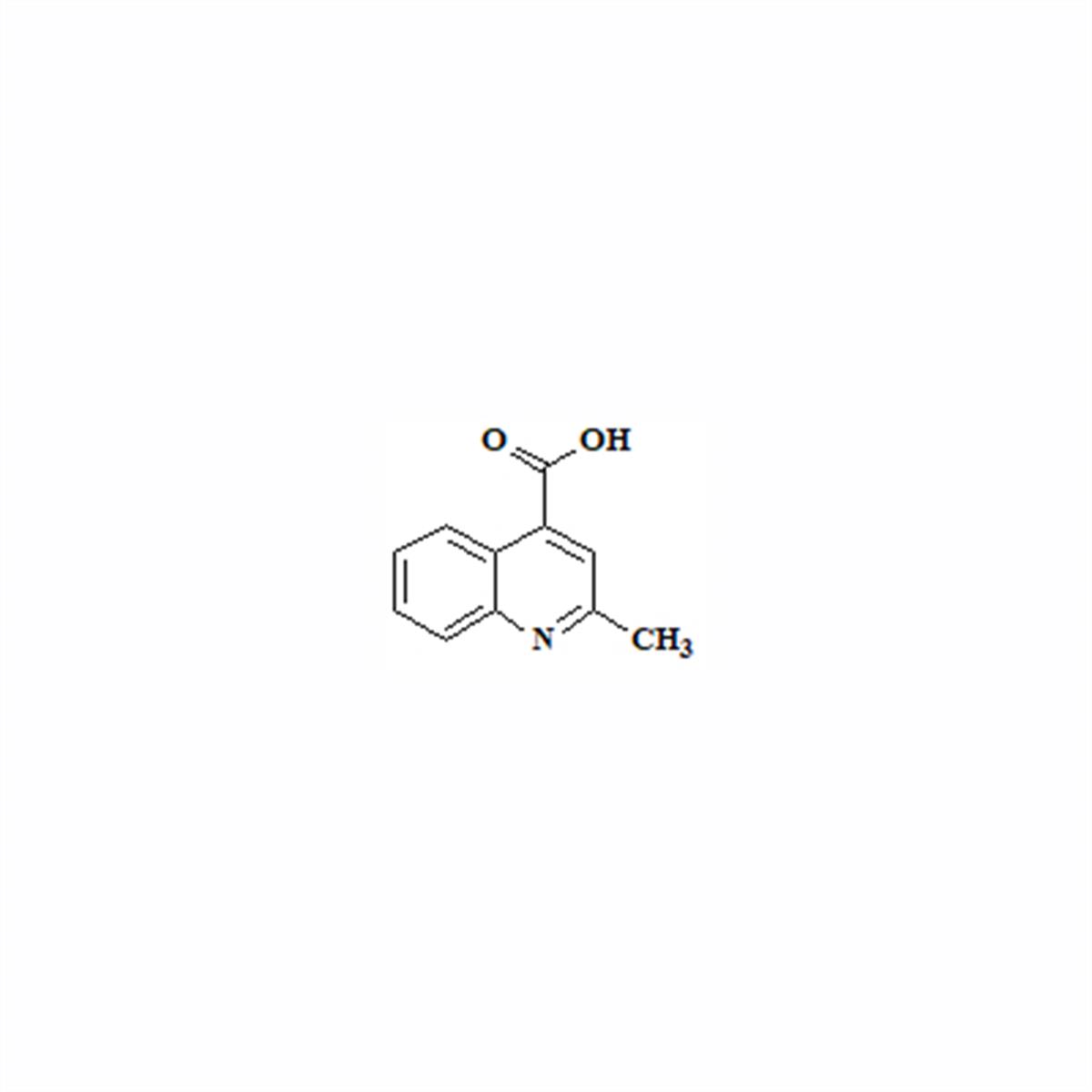
2-Methylquinoline-4-carboxylic acid
Product#: Gly-GMSM-122
$300.00
Availability:
Ships in 1-2 Weeks
2-Methylquinoline-4-carboxylic acid
- CAT Number : Gly-GMSM-122
- CAS Number : 634-38-8
- Molecular Weight : 187.19
- Molecular Formula : C11H9NO2
- Pack size: 10 g
2-Methylquinoline-4-carboxylic acid is an organic compound with the molecular formula C11H9NO2. It features a quinoline core structure with a methyl group at the 2-position and a carboxylic acid group at the 4-position.
Properties
- Molecular weight: 187.19 g/mol
- Chemical formula: C11H9NO2
- CAS Number: 634-38-8
- Purity: 90%
- Used for laboratory research purposes
- Potential applications in pharmaceutical and chemical research
- Its structure makes it useful for various scientific investigations, particularly in the synthesis of biologically active compounds
- Wear appropriate personal protective equipment
- Handle in a well-ventilated area
- Avoid skin contact, eye contact, and inhalation
- Store in a cool, dry place in a tightly closed container
2-Methylquinoline-4-carboxylic acid has shown potential therapeutic effects against several human diseases, particularly in the areas of parasitic infections and cancer:
Antileishmanial Activity
2-Methylquinoline-4-carboxylic acid (Q1) demonstrated promising activity against leishmaniasis, a parasitic disease caused by Leishmania protozoa:
- In a 2019 study, Q1 was found to be the most active compound among 15 synthesized quinoline-4-carboxylic acids against L. donovani promastigotes1.
- The researchers evaluated the IC50 values of these compounds against L. donovani and found Q1 to be the most potent1.
- This suggests potential for developing new antileishmanial drug candidates based on the 2-methylquinoline-4-carboxylic acid scaffold.
While not specific to 2-methylquinoline-4-carboxylic acid, related quinoline-4-carboxylic acid derivatives have shown anticancer activity:
- A series of 2-(4-acrylamidophenyl)-quinoline-4-carboxylic acid derivatives were designed and synthesized as SIRT3 inhibitors for potential cancer treatment2.
- One compound (P6) from this series exhibited potent antiproliferative effects against several leukemia cell lines, including THP-1, MOLM-13, SEM, and MV4-112.
- The compound suppressed colony formation in these leukemia cell lines, indicating its potential as an anticancer agent2.
