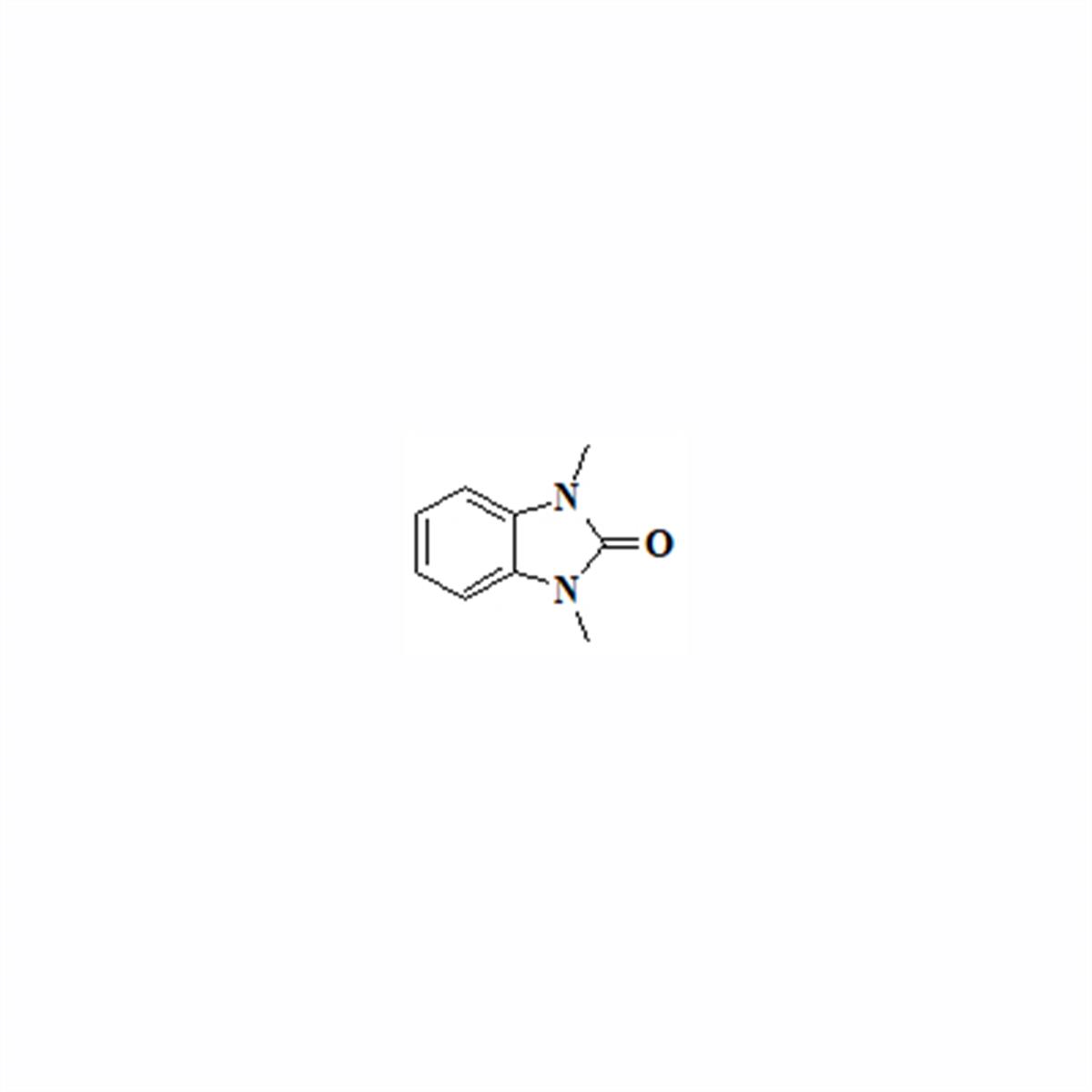
1,3-Dimethyl-1H-benzo[d]imidazol-2(3H)-one
Product#: Gly-GMSM-129
$500.00
Availability:
Ships in 1-2 Weeks
1,3-Dimethyl-1H-benzo[d]imidazol-2(3H)-one
- CAT Number : Gly-GMSM-129
- CAS Number : 3097-21-0
- Molecular Weight : 162.19
- Molecular Formula : C9H10N2O
- Pack size: 5 g
1,3-Dimethyl-1H-benzo[d]imidazol-2(3H)-one is an organic compound with the molecular formula C9H10N2O. It is a useful chemical in organic synthesis and has potential applications in pharmaceutical research.
Property
- Chemical Formula: C9H10N2O
- Molecular Weight: 162.19 g/mol
- CAS Number: 3097-21-0
- Log S (ESOL): -2.32
- Solubility: 0.776 mg/ml (0.00478 mol/l)
- Class: Soluble
- Log S (Ali): -1.63
- Solubility (Ali): 3.79 mg/ml (0.0233 mol/l)
- Organic Synthesis: Used as a chemical intermediate in organic synthesis reactions
- Pharmaceutical Research: Potential applications in drug discovery and developmentlts
- Storage: Store in a cool, dry place
- Handling: Use appropriate personal protective equipment
Cancer
Benzimidazole derivatives, including 1,3-dimethyl-1H-benzo[d]imidazol-2(3H)-one, have demonstrated promising anticancer properties:
- Mechanisms of Action
- Topoisomerase Inhibition**: Some benzimidazole compounds act as topoisomerase I and II inhibitors, interfering with DNA replication and transcription in cancer cells[1].
- DNA Intercalation**: Certain derivatives can intercalate with DNA, disrupting its structure and function[1].
- Microtubule Inhibition**: Some benzimidazoles, like methyl 2-(5-fluoro-2-hydroxyphenyl)-1H-benzo[d]imidazole-5-carboxylate (MBIC), act as microtubule inhibitors, affecting cancer cell division[3].
- Affected Cancer Types
- Benzimidazole derivatives have shown activity against various cancer types, including:
- Breast cancer
- Leukemia
- Hepatocellular carcinoma
- Ovarian cancer
- Cervical cancer
- Lung cancer
- Prostate cancer
- Benzimidazole derivatives have shown activity against various cancer types, including:
EGFR (Epidermal Growth Factor Receptor) Signaling:
- Some benzimidazole compounds have been shown to inhibit EGFR kinase activity. For example, compounds 10 and 13 exhibited significant inhibition of EGFR kinase with IC50 values of 0.33 and 0.38 μM respectively, comparable to the known EGFR inhibitor erlotinib.
- Inhibition of EGFR can disrupt downstream signaling pathways involved in cell proliferation and survival.
Cell Cycle Regulation:
Benzimidazole derivatives were found to arrest the cell cycle at different phases:
- Compound 10 arrested the cell cycle in G1 and G2 phases in A549 lung cancer cells.
- Compound 13 arrested the cell cycle in G1 phase in A549 cells.
- In MDA-MB-231 breast cancer cells, compound 13 increased cell distribution in G1 and S phases, while compound 10 increased distribution in G2 and S phases.
Apoptosis Pathways:
- -Several benzimidazole compounds demonstrated the ability to induce apoptosis in cancer cell lines. This suggests they may activate pro-apoptotic signaling cascades.
DNA Damage Response:
- -Some benzimidazole derivatives act as topoisomerase inhibitors and DNA intercalating agents. This can trigger DNA damage response pathways.
Microtubule Dynamics:
- Certain benzimidazoles, like methyl 2-(5-fluoro-2-hydroxyphenyl)-1H-benzo[d]imidazole-5-carboxylate (MBIC), act as microtubule inhibitors. This affects pathways regulating cell division and cytoskeletal organization.
Epigenetic Regulation:
- Some benzimidazole derivatives have been reported to act as epigenetic regulators, potentially affecting gene expression pathways.
Protein Kinase Signaling:
- Benzimidazoles have been shown to inhibit various protein kinases, which are involved in numerous signaling cascades.